November 24, 2009

The Link between Sports and Heart Health

This is my first guest blog post ever. It was written by Aurelie who owns the site Active Living Community. I post her article here because I live by what it says.
Researchers have long been aware that physical inactivity is a risk factor for heart disease. It’s even believed that exercise is not only essential in the role of prevention, but also can reverse heart disease. The American Heart Association recommends 30 to 60 minutes of moderate intensity exercise three or four times per week. Participation in a variety of sports is one of the best ways to meet this recommendation.

The benefits of exercise and participation in sports-related activities are numerous. They include:

  • Improved heart function by improving its pumping efficiency
  • Improved lung function by strengthening the muscles involved in respiration
  • Increased energy levels
  • Increased metabolism
  • Stress reduction
  • Improved strength and endurance
  • Better flexibility and range of motion
Research
There’s a mountain of scientific evidence that supports the heart health benefits of maintaining a healthy and fit lifestyle. Recently, researchers at the Feinberg School of Medicine at Northwestern University in Chicago studied a random national sample of teens and adults between the ages of 20 to 49 years old. The subjects who participated in this study did not exhibit any signs of heart disease. Each participant underwent a stress test which uses a treadmill and various monitoring devices to track vital signs while exercising. Surprisingly, 34 % of teens and 14% of the adults were found to be in the category of “low fitness” outlined by the researchers.

A recent review of studies completed by scientists at the University of Tsukuba Institute of Clinical Medicine in Ibaraki, Japan confirmed that people who have a high degree of cardiorespiratory fitness are less likely to develop heart disease. Cardiorespiratory fitness can be assessed by conducting the kind of stress test previously described. Researchers from the Tsukuba Institute have suggested that cardiorespiratory fitness could actually be used as a predictor of heart disease based on their review of studies published in the Journal of the American Medical Association.

Aerobic vs. Anaerobic Sports
The American College of Sports Medicine (ACSM) defines aerobic exercise as "any activity that uses large muscle groups, can be maintained continuously, and is rhythmic in nature." Participation in a variety of sports provides this type of exercise. Just a few examples include cross-country skiing, cycling, swimming, running, and aerobic dance. Additional examples of aerobic sports include inline skating, and kickboxing. There are also a variety of team-oriented sports that qualify as aerobic exercises if they are played with moderate periods of intensity. Soccer, basketball, cross-country running and volleyball are examples.

Anaerobic exercise is any activity that requires short bursts of highly intense activity. Weight training, sprinting, and strength training are examples of this type of exercise. People on anticoagulants like rivaroxaban should be very careful when it comes to contact sports, as cuts and bruises can be dangerous. Doubles tennis is a sport that offers this type of exercise. Though aerobic and anaerobic sports-related exercise is different, they are both incredibly beneficial to heart health.

Guest post contributed by Aurelie of Active Living Community at http://www.activelivingcommunity.com/

November 16, 2009

Book launch date set: Dec 16th

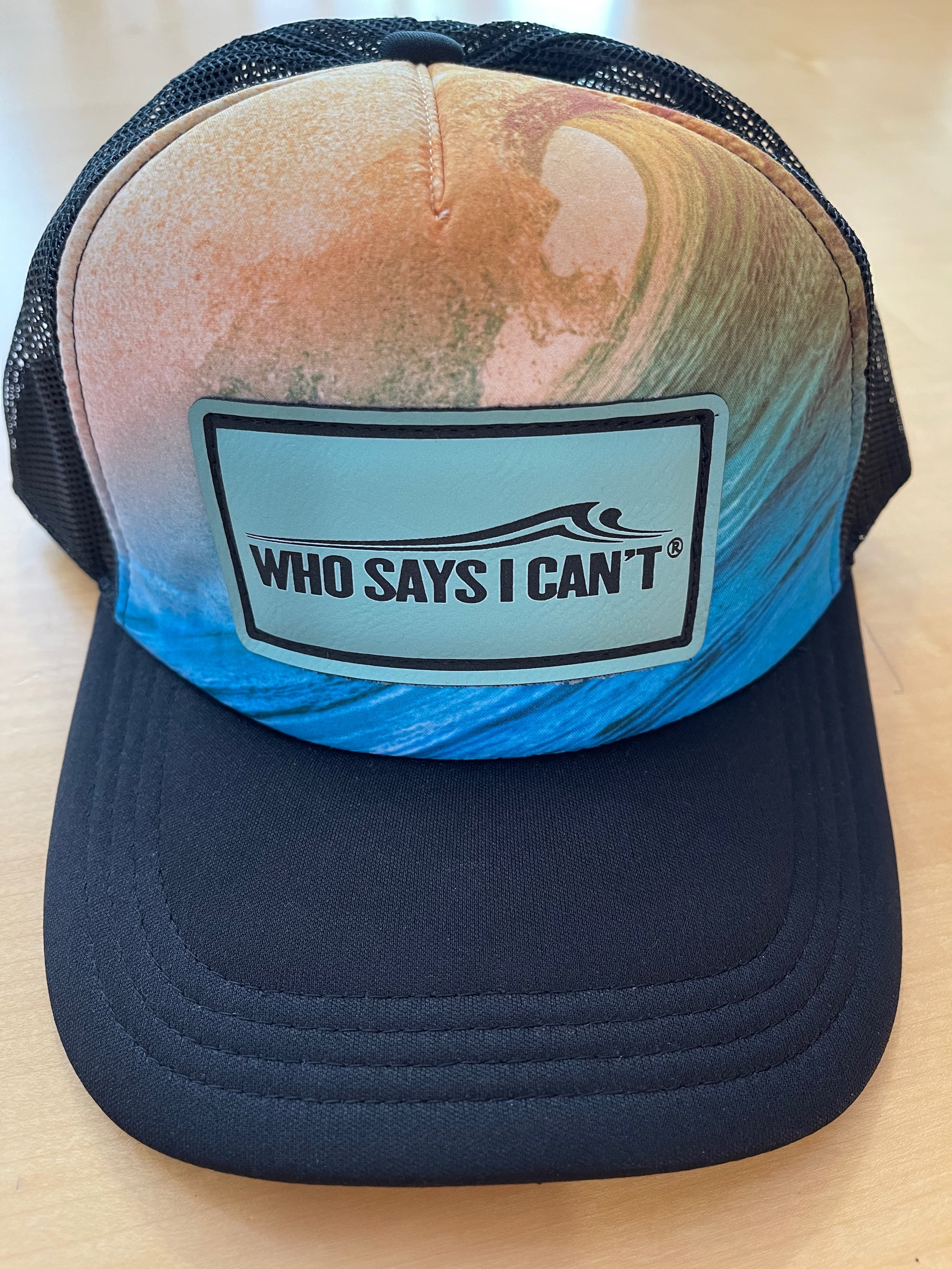
The launch of my book Who Says I Can't has been changed to Dec 16th 5-8pm at the world headquarters of the Pan-Mass Challenge in Needham:

Date: Dec 16 changed!!
Time: 5-8pm
Place: 77 4th Ave, Needham, MA
Bring: Your copy of Who Says I Can't purchased here

As many of you may know, I have been working on this book for the past several years. Well at long last it is finally in print! I am pretty sure you or someone you know will really enjoy and benefit from this book. If you want to come say hi and have me sign a copy for you, please consider coming to this launch on Thursday December 16th.

Billy Starr and his PMC are generously allowing me to use their space to hold this event. The PMC is featured prominently in the book and in fact the cover image was a Boston Globe picture of me in the 2003 edition of the PMC jersey. I am donating a portion of my proceeds from the book back to the PMC where it will go to Dana-Farber for research on osteosarcoma, the kind of bone cancer that took my leg and a lung. If you are a PMC rider I bet we have ridden together in one of the past 7 years I have done it!

As I cannot predict how many people will be coming and therefore how many books to have at the launch I need everyone who is coming to purchase the book in advance and bring it with you to the event. You can already purchase it today and they will ship it to you in time for the event. Purchase it directly from the publisher here

https://www.mybookorders.com/order/default.aspx?siteid=292

November 12, 2009

A Five-year Labor of Love

“You have zero chance of survival.” That is what my nineteen-year-old brain heard as my doctor told me that the cancer that took my right leg three years previously had now spread to my lung, two-fifths of which had also just been removed. What he probably said was, “No one has ever survived once this type of cancer spreads through the bloodstream.” That was over thirty-five years ago. I survived. And then some.

Who Says I Can't is about what effect hearing those words has on someone’s personality and how one can not only survive, but also fight back, recover, and thrive. This is not a “cancer book.” Those are written when the survival is new and fresh and the experience is raw. Instead, this book, written with more than a thirty-five-year perspective, is about human perseverance, adaptability, and strength. I am not a famous athlete, a movie star, or a national politician with a ready-made stage. But I have an important story to tell, one that might help others.

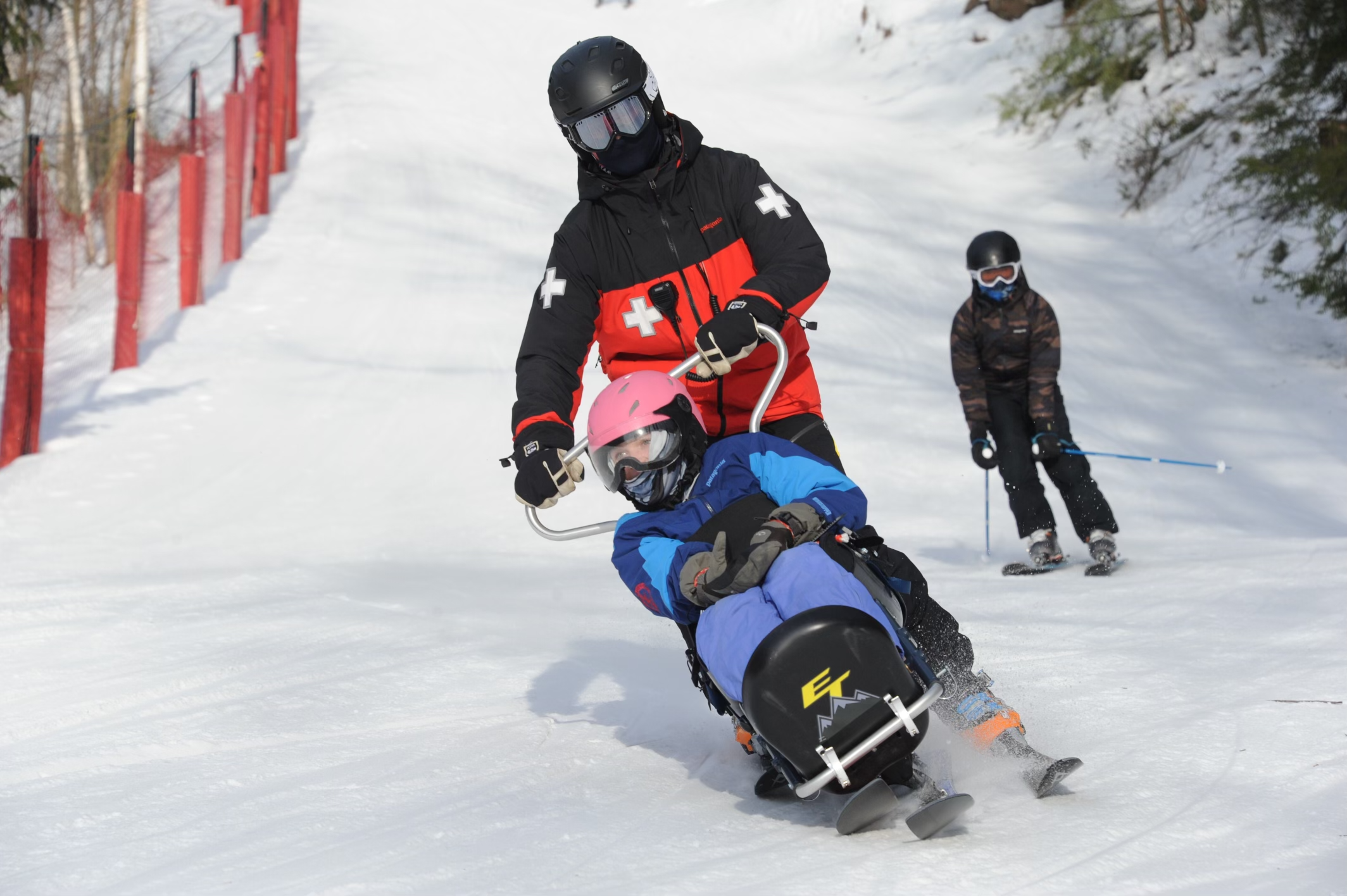
I was as devastated as one can possibly be after losing a leg at age sixteen, losing a major portion of a lung at age nineteen, having a year of chemotherapy, and all the while thinking I would die any day. To get through life at all I desperately needed to find a way to regain a sense of self-confidence. I did that through athletics. I went off to Utah to become a ski bum and came back a double black diamond amputee skier. I was told it was "sad that an amputee can't ride from Boston to New York" which inspired me to have ridden a bicycle, one-legged and one-lunged, from Boston to New York City three times, as well as the 192-mile Pan-Mass Challenge bike-a-thon across Massachusetts seven times raising $100,000 in the process. To keep my diminished lungs strong and healthy I took up open-water swimming and have swum across San Francisco Bay 16 times in what is considered the most grand and intimidating of competitive open water swims—also to raise money for charity. I have been married for more than twenty-eight years, adopted my wife’s son, and had two more kids as well as one grandchild, all before I turned fifty. I earned a PhD in computer science, published two technical books, and started six high-technology companies, where I have been Chief Executive Officer, Chief Operating Officer, Chief Technology Officer, or Vice President. Now I am helping others turn their dreams into new companies. Starting a company from scratch is extremely hard; every step you take it feels like the world is saying "I bet you can't."

I have another message as well. I have endured a psychological adversity from the word “considering.” No one wants to hear, “You are good considering” in any circumstance. Whether it is because of gender, race, age, or a disability, “considering” neutralizes what would otherwise be a strong comment, a confidence builder—a compliment. “Considering” is a take-the-wind-out-of-your-sails word. It puts you in a different group. People with any sort of disability or disadvantage do not want to be part of that group. They work hard to be “normal.” In fact, they have to work harder than the “normal” people whom they are trying to join. But they have a secret: their disability actually gives them an edge. It makes them more focused, more disciplined, more determined. But if their accomplishments are nullified with “considering,” they are shoved right back into the unwanted realm of pity and sympathy. It crushes the confidence built up through all their hard work. “Considering” is an insulting word. I have heard the word all of my life. It has angered me and made me work harder. I have strived to ban it from any description of me, yet still I hear it.

I cannot say that I have “cracked the code” on how to deal with adversity, the kind of adversity countless others have dealt with wonderfully well. However, many people over the years have told me that my story is inspirational to them. Becoming an inspiration was purely an accident. It took me a very long time to recover enough to look outside myself and my struggles and realize that I could motivate others around me--even the able-bodies. Maybe, with this book, I can shorten the recovery time for someone or just motivate those who have been knocked down to pick themselves up and "try". I know I would have liked a book like this when I was a sixteen-year-old with a stump for a leg lying in anguish, wondering what—if anything—I would be able to do next and wondering how—if ever—I could be “normal.”

When someone tempers your accomplishments with the word “considering” or rejects your aspirations with the phrase, “I bet you can’t,” the best defense is to show them that you can and you will. This book is about how I did just that and the insights with which I subsequently emerged. If these stories help just one person, this will have all been worth it.

November 11, 2009

Understanding Our Differences program is 30

Last night the Understanding Our Differences program in Newton, Massachusetts celebrated its 30th anniversary. The room was filled with elected officials (Governor Patrick, Mayor Newton, Mayor-elect Warren, members of congress, state representatives) and many supporters of this organization. Here is UOD's blurb on their mission:
Understanding Our Differences, Inc. is a nonprofit organization providing educational, outreach and disability awareness services. The mission is to increase information, understanding and acceptance of people with disabilities and individual differences. The primary focus of Understanding Our Differences' educational effort is the delivery of a unique and creative disability awareness curriculum by 350 volunteers each year in collaboration with the Newton Public Schools. The program was developed in 1978 by parents of children with disabilities who felt that successful inclusion required an understanding community. This nationally recognized, award-winning program has made a difference in the lives of over 25,000 children in the Newton Public Schools. The Understanding Our Differences curriculum has been disseminated to more than 200 communities and school systems throughout the nation.
I was involved with the group as a presenter many years ago. Now I realize with my blog and my book coming out that my messages and those of UOD are aligned perfectly. Last night I made contacts that I hope will get me much more involved with the group going forward.

November 8, 2009

Jonathan Alter's blurb for Who Says I Can't

Jonathan Alter is a senior editor and columnist at "Newsweek" and a contributing correspondent for NBC News. He's also an author whose most recent book about FDR's early days in the White House is called "The Defining Moment."

Jonathan is also a cancer survivor which he wrote about in the cover story for Newsweek in April of 2007. His article began:
I took the call on my cell phone at the Starbucks in New York's Penn Station. It was from a doctor I barely knew telling me that a CT scan—ordered after three weeks of worsening stomach pain—showed a large mass in my abdomen, with what she said was "considerable lymph node involvement." I rubbed my eyes and sensed the truth instantly: cancer, and not one that had been detected early. I was 46 years old and had not spent a night in the hospital since I was born. Nonsmoker. No junk food beyond the occasional barbecue potato chips. Jogged a couple of times a week. I was not remotely ready for this.
You can read the rest of his great article here. I wrote a letter to the editor when that issue came out and along with 999 other letters, mine was forwarded to the author of the article. Jonathan wrote me back and said he wanted to do a piece about me on the Today Show. He did do that show after having done the PMC bike ride with me.

Jonathan and I have stayed in touch and he has been a big supporter of me finishing Who Says I Can't. At a low point of discouragement he said to me "just do what you always do...just persevere and you will get it published." Well its on its way now but along the way, Jonathan also read the final manuscript and agreed to write a blurb for the back cover. This is what he wrote:
Jothy Rosenberg is not a celebrity but an Everyman, which gives his wrenching story of astonishing grit its inspirational power. After being told when he was 19 that he had no chance of surviving the cancer that had already cost him one leg and one lung, Jothy made a decision. He would ski until he died. Instead he became one of the first beneficiaries of then-primitive chemotherapy, a champion one-legged, one-lunged skier, swimmer and cyclist, and an early model of how to triumph over cancer and disability. For anyone trying to turn a cancer diagnosis, major disability, or even a major life challenge into a character-building experience, this well-written book is indispensable.
You can be sure Jonathan is getting an autographed copy. Thank you Jon!


November 5, 2009

Inspired!

Yesterday, my daughter Joanna (25) finished reading the final manuscript of Who Says I Can't and she wrote me the following note which I am reprinting here with her permission.

"Hey,
So...I just finished reading the book and I am wiping tears from my eyes. I found myself laughing out loud at many points, smiling or crying (in a good way). Overall, it was inspirational, thoughtful and true. I loved all of the stories that I have heard over the years and especially liked reading the one's I was involved in. But to be honest with you, the most amazing part of the book are not the stories but that parts that come from your heart and let the reader know how your life has been changed in so many ways and is still changing. Reading this as your daughter was an amazing experience and made me so proud. To think how much of an effect this story has had on my life and having lived through a lot of your experiences, just think what an amazing token this book will be for someone fighting a disease and searching for inspiration. I am so thrilled to be a part of this process and I cannot tell you enough how proud I am of you and how you truly are my hero.
I love you with all my heart."

For a father, it cannot get any better than that.

November 2, 2009

The Social Stigma of Staring

As happens at least three times a week, I was at the pool the other day and when it's a weekend day, there are a lot of kids. And on the pool deck I walk around on crutches and the kids stare. I never like it but I have had to get used to it. It's worse in the locker room because then it starts to feel like an invasion of privacy especially when they walk up and are looking "down there" and never even make eye contact. In Who Says I Can't (which will be out around Thanksgiving) I wrote a bit about some experiences and insights I gained about staring. Here's one:
Disability has many negatives in society. For people disabled due to a missing body part, a prosthesis removes the obvious physical differences on which people focus. People cannot see that you are physically different, so you can interact with them more normally. It’s as if the elephant has left the room. Getting stared at is never comfortable; it is a constant reminder you are different and don’t fit in. For those who have a deformity, who are in a wheelchair, or who have some undisguisable condition, there is no relief from the staring. Children can be pretty harsh and cruel to anyone who looks different. When I was sixteen and had just had an amputation, because they found out it was from cancer, my friends headed for the hills. I was completely shunned. In 1973, some people even thought you could catch cancer. But today many kids still shun peers with almost any disease because it makes that person different and because anything hinting at death is too scary to face. Today, little kids seem to think if you are missing a leg or have some other physically striking difference, the disability must affect your hearing. Walking on the pool deck, I constantly hear little kids yelling to their friends or their parents, “What happened to that man’s leg?” They think I am deaf, as well as walking on crutches. Individuals turn that on themselves when they feel inadequate. Jane Smith writes in Trying to be Normal, “The most difficult part of being disabled is coming to terms with the negative values I have internalized. I am disabled and I am trying to work through my prejudices about my own disability and others. My gut reaction was to deny that I had these feelings, but denial does not allow me to come to terms with my devaluing prejudices.”
But I eventually learned that the best defense against sympathy, or worse pity, which is what the person staring is assumed to be feeling, is prowess. Prowess at anything counteracts the pity and in that case, magically the emotion behind the stares is not pity its admiration. That's is so much better. Here's another excerpt from the book about how getting good at skiing was just such a defense early on for me:
The way I felt when first seen in public without my prosthesis was a stark contrast to how I felt on the ski slope. That was the one place where I did not care if anyone stared. I relished the jaw-drop change in perception that occurred as they saw me first as an amputee with outriggers, and then as a double black diamond skier launching down the steepest chute on the mountain, cruising over the bumps under the lift or floating through an untracked powder field. For me, the psychological benefits of the athletic activities were enormously beneficial. The intellectual prowess of someone who is disadvantaged can be equally beneficial. The bottom line is that we all need ways to excel and stand out from the norm without being judged by our physical appearance or circumstances.
What slowly happened was that through continued hard work -- this time on biking -- I was able to see a way not to blast past people as a young hot shot but to join them in a common purpose. The purpose of working hard together on an important cause like the Pan-Massachusetts Challenge raising money for cancer research. And here because everyone had had to work hard to be able to ride 192-miles themselves they really respected the fact that with one leg and one lung I too was doing it too. This was the moment I became an Accidental Inspiration and without meaning to, not only was I not getting stared at out of pity but people found what I was doing motivating to them and they were excited enough about that to shout it out to me. Here is one final excerpt of the first moment that happened:
The huge string of riders bunched up at the base of large hills as riders slowed their speed dramatically as they started up the slope. Since these were not interstate highways, the hills were not beaten into submission to become slight up and down grades. The grade on some of these hills was steep, and many were also long. As I approached that first hill and the bunching riders, anxiety got my heart rate going even more than the physical exertion. I had misjudged how fast I would be on these hills. I started to pass riders. Some people got off their bikes and walked up the steeper hills. As I rode past them, Jerry said the stares and double takes were commonplace. I didn’t mind. They were for the right reason.

People started to make comments, too.
“You inspire me.”
“If you can do it, I have to stop this whining.”
“Way to go.”
“Tough man.”
“Superman!”
My message to parents and to their children about staring is simple: don't slip into feelings of pity for that person for you know not what they can and cannot do. Go talk to them and ask if you are curious about what happened to them. And find out what they like to do and you will find out how that person has adapted to their disability and perhaps, as is frequently the case, has turned that disability into a super-ability to excel at something they love and focus on.

November 1, 2009

This is why I live in New England

Fall hikes with my dogs with leaves in full color and the air crisp and cool. This is why I love living in New England. Fall is the most magic season here. And we love the hikes through the woods, across fields, along the numerous rivers around here and up the occasional mountain to catch the view of vast colorful vistas. Sometimes I play tricks on the dogs and climb up on a rock they can't get up. Like here:


October 24, 2009

Have fun with it

I always wanted to get a peg leg. Why should those movie pirates have all the fun. And they need special effects to get away with it. Not me. Just a piece of cherry wood beaten up a little bit with a fitting on the top and a nice rubber pad and I was good to go. Should have done it years earlier. I easily won best costume at the company Halloween party. The hook is pretty cool too. It's real of course and works. Here is a close up of the peg leg for those who are interested.


October 22, 2009

Who Says I Can't available 21 Nov 2009

We have a launch date: the book will be in print on 21 November 2009. In time for Thanksgiving and Christmas. It will be available on Amazon in advance of that (no date for that yet). It can be ordered now from the publisher now and from stores on 11/21.

October 19, 2009

Self-esteem isn't everything; it's just that there's nothing without it

A good friend, Ross Lilley the Executive Director of AccesSportAmerica, recently wrote me "I believe you to be refreshingly open, humble and even a little embarassed at the attention you get, but you seem to realize that you have to be out front to convey a very powerful message."

He hit the nail on the head. With my book Who Says I Can't about to get out and onto shelves, I am understandably excited and I want to get that book into lots of people's hands because I believe it can do a lot of good. And to do that I have to talk about and promote the book which is, of course, self-promoting. Even if you are proud of what you have done, most of us who are not weaned in Hollywood are not that comfortable in a self-promotion mode. I certainly am not. My wife, being a midwestern Catholic girl from a small town is mortified with all the self-promotion that is going on. But I learned many years ago when climbing a long steep hill on a bike ride from Boston to NYC that whether I like it or not, attention will be paid to my accomplishments because that attention will help and motivate others. As I wrote in the last chapter of my book entitled Accidental Inspiration, I set out to do all the sports and extreme activities I have done in my life for myself not to inspire; in fact that word was not in my vocabulary at all until recently. These sports were about proving something to myself and gaining some very hard fought self-confidence. Each sport or activity I tackled turned into a means to one little victory at a time which, with a lot of focus and hard work, could turn into enough success at that activity that I could build a bit more self-esteem. And as Gloria Steinem (pictured above) always said, "Self-esteem isn't everything; it's just that there's nothing without it." It's rare to find someone who has never had a "self-esteem crisis" whether it is from something pretty bad like a disability or from something pretty trivial like a zit or from millions of things in between that are just called "life". But some things that life throws at us are permanent and can tear down one's self esteem frequently, harshly and relentlessly so you have to find a way to have a steady stream of little victories to battle back, keep one's balance and keep one's self-esteem (and sanity).

Ross is right. On the Pan-Mass Challenge bike ride literally hundreds of people see me and tell me I am an inspiration to them and others. No matter how many times I hear that, it still embarrasses and humbles me. I even used to look around to see who they were talking to. I do realize now that they are talking to me. And now I am trying to get up and speak in front of groups about my story, about my book, and about some of these philosophies that have sustained me because, for the same reason that I wrote the book -- its what I would have wanted to read when I was most in need -- I do have a powerful message and the more people who hear it the better.

October 14, 2009

Cullen Kleftis dies at 19 from Osteosarcoma

Too often people think the advances we have made, such as the treatments that contributed to my surviving, mean no one is dying from the horrors of Osteosarcoma. Using Google Alerts on the keyword 'osteosarcoma' I track all the Web content that mentions the disease and I can assure you we have not stopped this disease from taking the lives of young vibrant people. I don't bring over all the stories I read that are sobering, depressing, and make me ever more thankful that I somehow managed to survive, but this story I just had to bring across and share. Sorry, but its time for a reality check.

This is from UticaOD.com

Cullen Kleftis was known for two things: his grin and his indomitable spirit in the face of an ongoing illness.

Diagnosed with an aggressive bone cancer in 2006, the then 15-year-old remained determined to live life to the fullest. It was a philosophy he maintained until the end – traveling to Alaska briefly just weeks before his death Sunday as a result of Osteosarcoma.
“He never was going to quit, he was going to fight,” his mother, Sandra Kleftis, said Tuesday. “It was all about living and doing it on his terms.”

That resolve touched many in the community, which rallied together to throw a benefit for the family in May 2008. At the time, Cullen Kleftis was waiting for the results of some medical exams, but also planning for his senior program, graduation and a skydiving trip.

“Whatever these scans show, I’m not changing it,” he said of his schedule at the time.

This week, the community is rallying behind the family again. A Facebook page in his memory had more than 250 members as of Tuesday evening, and many more memories and sympathy messages were left on a CarePages site often updated by his mother.

Several individuals commented on how much their children had enjoyed having Kleftis as a counselor at a summer camp for children with cancer.

Others mentioned that they knew Kleftis only through a mutual friend of a brief meeting, but had been struck by his presence in that short time.

“Cullen had that effect with people,” his mother said. “If you just met him for 5 minutes, 10 minutes, he just had that effect. He just sticks with you.”

Kleftis moved to Clinton from Pennsylvania in 2007. By the time he graduated from high school in June 2008, he already had undergone three rounds of chemotherapy and at least four major surgeries.

The first removed his left knee and replaced most of the bone from his lower leg with metal rods. Others removed tumors from around his lungs.

Once an avid hockey player, he served as manager of the school’s varsity hockey team after his illness left him unable to play.

Clinton High School postponed a home soccer game Thursday against New Hartford until 3 p.m. Saturday to give players a chance to mourn “a brave 19-year-old Clinton Warrior who fought a long and courageous battle,” coach Gil Palladino said.

Despite continuing cancer treatments after graduation, Kleftis was able to attend one semester at Clarkson University this spring. He was studying engineering and earned the distinction of Presidential Scholar with a GPA of 3.9. for that semester.

He later enrolled in the engineering program at Mohawk Valley Community College to be closer to his family, but had to withdraw before the beginning of the fall semester due to his illness, his mother said.

“He put everything he had into school,” she said. “He did extremely well academically and socially. Just an amazing kid. Absolutely amazing.”

October 13, 2009

Boat pull-out excitement

Taking the sailboat out of the water every fall is a pretty routine matter. The boat trailer is lowered into the water and sits there waiting for us with a person ready to catch the sailboat as it comes (hopefully) smoothly and gently in. Two people get in the dingy and go out to the moored sailboat. The dingy is tied on to the stern of the sailboat, one person mans the rudder and the other grabs the single oar used for when the boat is becalmed and starts rowing. At first, as you would expect, rowing on just one side of the boat makes it turn the other way but once the big boat gains some momentum, the rudder can more than compensate and the huge keel plus the rudder make the boat pretty easy to steer on a straight course. A short five minutes later we are usually sliding the boat straight onto the waiting trailer.


Not this year.


This was the windiest and coldest of any day in 15 years of taking the boat out of the water. The wind was coming from the south which is the direction the boat had to go from its mooring to the boat ramp. The tide was coming in and it was also making the water flow in the same direction as the wind. The tide is big up in Maine so its a lot of water to move in a scant six hours as well. Things started out just like normal and Dad was the one left at the boat trailer while Carole and I, as per our normal, went out to bring the boat in. Just getting the dingy out to the sailboat was more challenging than usual due to the wind, tide and waves. But we got to the Snowcap ok and took off the rain cover and untied the rudder. I got out the single oar and put the oar lock on the boat's starboard side and cast off the mooring. I reminded Carole that we would start to go in a circle until we could build up a little head of steam. But pretty quickly I could see that this was not like every other year. I was pulling very hard on that oar and I could not get the boat to move upwind. We were losing ground not getting closer to the boat ramp. I switched sides to see if working a little with the wind on the same side of the boat the wind was coming from might help. Again, we turned but never made forward progress. I could not even get us back to the mooring we just released and now it was 30 yards upwind of us and getting farther and farther away. Switching sides to row from one more time also didn't help so now I realized I needed to have a plan B. And perhaps a plan C as well. Could I drift into another mooring to buy us time to formulate plan B perhaps? Nope the only mooring left in the little marina we were in was too far in the direction of land and I did not have enough control of the boat to get it there in time.


Plan B was going to be for me to shift the little dingy from being pulled by the big sailboat to being the little tug boat turning the tables on the big boy. I wanted as little time wasted in shifting the dingy to be in front with a tow line as possible as we were drifting the wrong direction pretty fast. Luckily we had a line we could use so I quickly dropped the oar and unraveled the line, tied it to the cleat on the front of the sailboat and had Carole pass the dingy up alongside so I could get into it. Once in it I tied the tow line around the seat I was sitting on as there are no cleats or tie-off places on the dingy. It is a very small 6-foot long affair. I got things positioned where I wanted them probably in about two minutes and was now starting to row. The first thing I noticed was that I was able to stop the drift. That was the first good thing to happen. And then, very slowly as I pulled and pulled long deep strokes on the dingy oars I was able to see the inklings of forward progress. I now knew if I just had the strength, endurance and patience I would need I could pull this several ton Herreshoff wooden and fiberglass boat with the tiny dingy the 1000 yards or so we needed to go. Every 5 minutes or so we only went about 100 feet so it was a long hard pull. The dingy was getting buffeted by the increasing wind and waves. I was looking straight at the Snowcap with Carole steering and it was bouncing around on the waves as well. But every time I looked around we were getting incrementally closer to the docks and once I got around them, we were going to be in a quieter little bay and on our way to the boat ramp. Finally after what seemed like an hour we got into that quieter water. My arms were warm from the work but luckily all the crutch-hiking, swimming and rowing I keep up with regularly meant I did have the strength and endurance to keep going until we were home free. I never had to use Plan C. You are dying to know what that is right? It was to put up the sails and sail that bad boy until I was upwind of our goal, then drop the sails and go back to single oar rowing but this time with the wind helping me. I think Plan C would have worked but I'm glad we didn't need it. We had plenty of excitement just with Plan B.

October 12, 2009

Hierarchy vs. Handicapped


Many people who see all the extreme sports I have figured out how to do and how to do pretty well, think it's kind of weird that I now make an effort to park in handicapped spots. In fact, there are times when I have two kayaks on top of the car and a couple of bikes on the back of a car and still park in a handicapped spot. What's up with that? There was a time back when I was young when I wanted nothing to do with a handicapped spot or placard or even the word. But I learned that it's not when I have my leg off and am on crutches that I need those spots it's when I have my leg ON when it matters. That is surprising to a lot of people. But these prostheses are not what you might think. They are high tech and sophisticated yes. But they are a large weight of metal and plastic handing off of a residual limb and they rub and chafe no matter how hard we work on getting a good fit. So in the end, I think of each day as having a quota of steps in it I can take. If I get past that quota I will hurt and sometimes hurt for a few days. That happens after a long trip through multiple airports. So saving steps from parking spot to office or store is a big deal.

This is why at my new job I find it so wrong that they have a small convenient parking lot right by the front door but the spots in it are all reserved for senior executives. Down the hill and a long walk from the front door is a large lot and along one side of it (yes, closest to the building) is a row of handicapped spots. But this is a long way from the front door. And I can assure you when they were designing that building those spots near the front door were designed for handicapped. While this may not be in violation of the letter of the ADA law it is certainly in violation of the spirit. Because I stated my case firmly, they decided to take a reserved named spot and put my name on it. Fine for me. But I did not succeed in making this work for all the other legitimately handicapped employees and visitors. They still have to walk a long way up a hill to get to the building. Senior executives, is hierarchy, position and stature this important that we favor you having a short walk over those for whom walking is hard or uncomfortable? We can do better than this...

October 7, 2009

Speaking at House of Blues Boston


Oct 7, 2009. I am speaking at the Boston House of Blues tonight at around 7 pm. It's a fund-raiser for the Friends of Dana-Farber and ultimately supports the Dana-Farber Cancer Institute and all the great things they do. This event asked me to speak because the book is imminent (publish date is early Nov) and because they view me as a bit of a poster child for what DFCI is all about. Should be a fun evening. Hope to see a lot of people there!

October 3, 2009

Mirror mirror on the Wall

The perception we have of ourselves from the perch up on top of our neck is completely different from that of looking at ourselves in a mirror. For someone with a new disability, one that physically changes them, it is natural to strive to get to a "normal" that allows them to relate comfortably with those around them. One look in a mirror can dash any progress because what you see in the mirror is what you think others are seeing when they look at you. But it's not true. Self-perception is part of the normalcy we seek and mirrors are anathema to a positive self-perception.


Become disabled and you look different, maybe walk different. Thankfully, time does to our ailments, mental and physical, what rain over millions of years does to mountains: it smooths them out, it wears them down, it softens them. After some time and a few positive steps and a few little victories that begin to build back our confidence and our feelings of normalcy, our self-perception too begins to change and be more positive. It happened to me. After years of working really hard on sports to have some little victories each one of which gradually helped me build back some much-needed self-confidence which then transferred over to all aspects of my life, I thought from up on my little perch that I looked pretty normal walking. But when I saw myself in a store window and I saw someone limping, someone downright gimpy. "Who is that gimpy guy," I would proclaim to myself only to catch myself and realize, just as a playback of my recorded voice doesn't sound like the me I hear inside my head, this guy I was seeing didn't look like the me I see inside my head. So which one is the real me?


The mirror is lying only to you! Just as the live voice coming from you and the recorded voice of you sound the same to others but not to you, so too do the live perception of you and the one in the mirror look the same to others but not to you. Your self-perception is the one you have worked on and built up over time and it's the ground truth. Ignore the mirrors. Break them all. People perceive you not just with the bare photons bouncing back at you from that evil mirror. They also see your accomplishments, the fight you are fighting, and your attitude. Things no mirror ever will show you. The you you see in your head, like the you you hear in your head is the real you and it's the one others see as well. Focus on the health, happiness and well-being of that you and not the one in the mirror.

Donate to Survivor Corps

Donate Today to Help Our Returning Troops! Donate Now! Survivor Corps